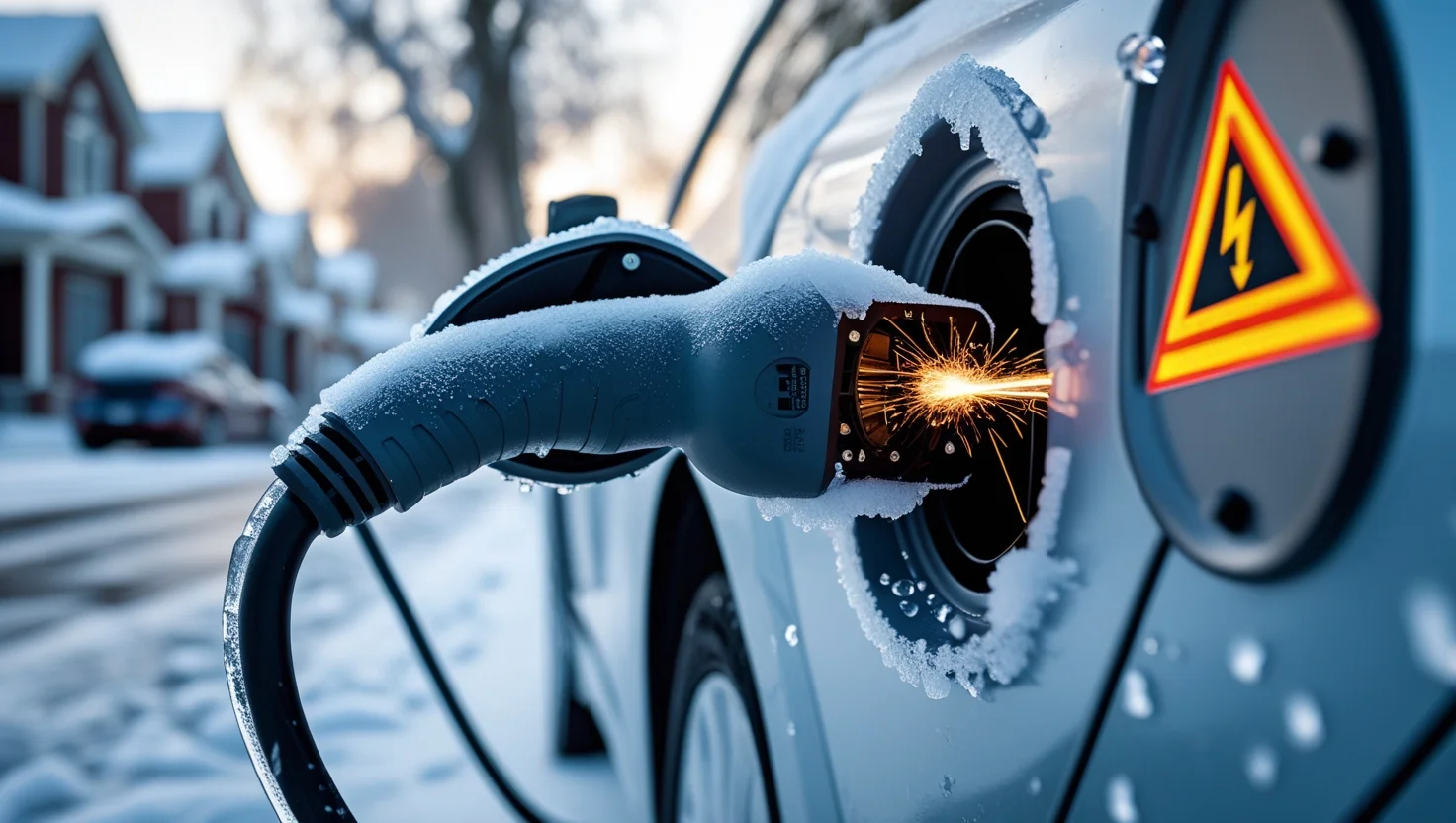
✅ Introduction: Why Winter Is Dangerous for EV Charging Ports
Winter weather isn’t just hard on roads—it’s brutal on your EV. From blizzards in New York to freezing rain in Toronto and ice storms in Manchester, EV owners across Tier 1 countries are facing a new seasonal challenge: protecting their EV charging ports from snow and ice buildup.
When EV charging ports become blocked or frozen, you’re not just dealing with inconvenience—you’re risking real damage. According to the U.S. Department of Energy’s official guide, cold temperatures, snow, and moisture can significantly reduce EV charging performance—especially if ports are not protected from buildup.
- ❌ Failed charging attempts that leave you stranded
- ⚡ Short circuits that can harm onboard electronics
- 🔥 Fire hazards from trapped moisture and exposed conductors
- 💸 Costly repairs to connectors, batteries, and charging systems
Unfortunately, many drivers don’t realize the problem until it’s too late. That’s why this expert-approved 2025 winter safety guide reveals the 7 smartest and safest ways to remove snow from EV charging ports—without damaging your vehicle or voiding your warranty.
Whether you drive a Tesla, Nissan Leaf, Rivian, or Ford Mach-E, mastering cold-weather charging safety is a must. Let’s snow-proof your EV charging port today.
Table of Contents
⚠️ 1. Understand the Hidden Risks of Snow & Ice on EV Charging Ports

Many EV owners don’t think twice about snow accumulation—until their EV charging port fails to connect, or worse, starts showing signs of rust and corrosion. But by then, the damage may already be done. So, what makes winter so dangerous for EV charging ports?
❄️ 1. Ice Buildup Can Break Components
When snow melts and refreezes inside your EV charging port, it can cause ice expansion that cracks plastic housings or bends delicate connector pins. A misaligned plug or deformed pin can prevent charging altogether.
💧 2. Trapped Moisture Causes Corrosion
Snow and slush may seem harmless, but as they sit inside your EV charging port, they introduce moisture that gradually corrodes metal contacts. Over time, this corrosion leads to poor connectivity, slow charging, or even complete failure.
⚡ 3. Melting Snow Can Trigger Power Surges
Water and electricity don’t mix—especially in high-voltage environments. As snow melts inside EV charging ports, it can create short circuits or electrical surges, damaging your onboard charger or battery system.
🧊 4. Cold Weather Slows Down Charging Efficiency
In frigid temperatures, the battery chemistry slows down, and snow-covered or frozen charging ports only make things worse. You’ll notice slower charging speeds, reduced driving range, and increased wear on your battery over time. For Tesla owners, enabling preconditioning and scheduled charging are key. Tesla’s official winter charging page offers helpful tips to optimize battery performance and prevent port freezing.
✅ Pro Tip: Moisture + high voltage inside EV charging ports = one of the most dangerous combinations for your electric vehicle.
🧤 2. Prep Your EV Before the Snow Hits

When it comes to protecting your EV charging port from snow and ice, the smartest strategy isn’t reaction—it’s prevention.
Avoiding snow buildup in the first place can save you from costly damage, unexpected charging failures, and winter breakdowns. Here’s how to winterize your EV charging port before snow strikes:
✅ 1. Use a Weatherproof Charging Port Cover
Invest in a weather-resistant cover specifically made for your EV model. These covers help seal off the charging port from snow, sleet, freezing rain, and road salt. Choose materials that are waterproof, non-conductive, and easy to remove during charging.
✅ 2. Park in a Garage, Carport, or Covered Area
Whenever possible, park your EV in a sheltered location. Keeping your vehicle indoors or under a carport reduces the chance of snow piling around the EV charging port, especially overnight during storms.
In snow-heavy regions of the US and Canada, even a portable carport offers valuable protection.
✅ 3. Position Your EV Away from Wind Direction
Snow drifts can bury your charging port even if it’s not actively snowing. By parking your EV with the port facing away from the prevailing wind, you minimize the chances of snow accumulating around the connection point.
✅ 4. Install a Covered Home Charging Station
If you charge your EV at home, consider adding a protective canopy, roof extension, or enclosure around your wall-mounted EV charger. This helps keep both the charging port and plug clean, dry, and safe—especially during storms.
Many EV owners in New York, Toronto, and Birmingham are now upgrading their setups to include winter-ready EV charging stations with built-in protection.
💡 Bonus Tip:
Combine these strategies with regular inspections. A quick look at your EV charging port before each charge—especially during winter—can help you spot ice buildup or moisture early, before problems begin.
🧊 3. Never Use These Snow Removal Methods

When your EV charging port is frozen or covered in snow, it’s tempting to take quick action—but rushing can lead to expensive damage or even safety hazards. Unfortunately, many EV drivers unknowingly make these critical winter mistakes, especially during the first big storm of the season.
Here’s what not to do when dealing with snow on your EV charging port:
❌ 1. Never Pour Hot Water on the Charging Port
Pouring hot water directly onto a frozen EV charging port might seem like a quick fix—but it can shatter plastic components. The sudden change in temperature causes thermal shock, which leads to cracks in the port housing and seals.
🔥 Water + freezing plastic + electronics = costly disaster.
❌ 2. Avoid Using Metal Tools or Scrapers
Using metal objects (like ice picks, screwdrivers, or car keys) to chip away ice may scratch the connector or damage the delicate electrical pins inside the charging port. Even small abrasions can reduce conductivity and result in charging failure or connector corrosion.
Use only EV-safe tools—never improvise with metal!
❌ 3. Do Not Apply Excessive Heat
Blasting the charging port with a hairdryer, heat gun, or other heat source may melt the plastic casing or overheat nearby sensors. In modern EVs, this could trigger battery thermal alarms, affect smart sensors, or even void your warranty.
Many EV models from Tesla, Nissan, and Ford have built-in temperature protections—overheating the area may cause the system to shut down charging automatically.
🧠 Pro Tip:
Instead of quick fixes, use a gentle de-icing approach and always consult your EV’s winter maintenance guide. The safest way to treat your EV charging port is with low-impact methods, designed to preserve the integrity of your connectors and battery systems.
🛠️ 4. Best Tools for Safe Snow Removal from Charging Ports

When winter hits, using the wrong tools can damage your EV charging port or even void your warranty. That’s why it’s time to ditch the shovel and the ice scraper—and switch to gear that’s designed specifically for electric vehicle safety.
Here are the EV-safe snow removal tools you need to protect your EV charging port without scratching, cracking, or overheating it:
✅ 1. Soft-Bristled Snow Brush with Silicone Edges
Traditional snow brushes or plastic scrapers can be too harsh for the sensitive areas around your EV charging port. Instead, use a soft-bristled brush with flexible silicone edges. These tools are non-abrasive and great for sweeping away powdery snow without harming the port cover or paintwork.
✅ 2. Microfiber Cloths for Drying and Cleaning
After brushing off snow, a high-quality microfiber cloth helps you remove any leftover moisture around the charging port. Microfiber is lint-free, gentle, and highly absorbent—ideal for cleaning tight spaces without leaving residue behind.
✅ 3. EV-Safe De-Icing Sprays (Non-Corrosive)
Not all de-icers are safe for EVs. Use non-corrosive, alcohol-free de-icing sprays specifically formulated for use around EV charging ports. These sprays melt ice without damaging plastic components, gaskets, or electrical contacts.
Avoid any product containing heavy solvents or salt-based formulas—they can corrode connectors.
✅ 4. Portable Air Blowers or Compressed Air Cans
For clearing moisture from tight spaces inside or around the charging port, a portable air blower or compressed air can is a safe, low-heat option. This helps dry out snowmelt trapped in connectors or seals, especially after rapid temperature changes.
Also useful for cleaning dust or debris from charging flaps.
✅ 5. Battery-Heated Gloves
Wearing battery-powered heated gloves allows you to gently warm up the charging port area by hand without applying direct heat. This reduces the risk of damaging sensitive electronics while still melting snow that may be stuck around the port edges. Plus, they keep your hands warm during cold-weather charging!
📦 Bonus Tip: Get an EV Winter Prep Kit
Many of these essential tools are bundled together in EV-specific winter protection kits, available on Amazon, Walmart, or dedicated EV accessory stores. These kits are ideal for Tesla, Rivian, Ford, Nissan Leaf, and Hyundai EV drivers looking to snow-proof their gear.
🔌 5. Step-by-Step: How to Remove Snow Safely from Your EV Charger

Snow and ice may seem harmless, but one wrong move can lead to damaged pins, corroded connectors, or even voided warranties. That’s why cleaning your EV charging port correctly—and carefully—is essential for safe winter charging.
Follow this EV-safe, expert-approved process to remove snow without damaging your charging equipment:
✅ 1. Power Down Your Charging Station
Before touching the EV charging port, always switch off your home charger or wall box to eliminate electrical current. This reduces the risk of short circuits and ensures safety while handling the port.
✅ 2. Sweep Away Loose Snow with a Soft Brush
Use a non-abrasive snow brush to gently clear snow around the charging port area. Avoid stiff bristles or scraping tools that could scratch the surface or damage seals.
✅ 3. Wipe the Port Area with a Microfiber Towel
Next, lightly wipe around the EV charging port with a clean microfiber towel. This helps remove residual moisture or ice particles and protects the connector from corrosion.
✅ 4. Apply an EV-Safe De-Icer (If Needed)
If ice has formed near the charging port, use a non-corrosive, alcohol-free EV-rated de-icer. Apply a light mist around the outer edge—never spray directly into the port.
✅ 5. Let Ice Melt Naturally—Don’t Force It
Never chip away at frozen ice inside your EV charging port. Let it melt gradually using ambient heat or warm air (not direct heat). Forcing it off may bend pins or crack the plastic housing.
✅ 6. Inspect the Connector Pins for Moisture
Before reconnecting your charger, visually inspect the connector pins and interior of the charging port. Look for frost, water droplets, or salt residue that could interfere with a safe charge.
✅ 7. Reconnect Only When Completely Dry
Only plug in your EV charger when the charging port is completely dry. This ensures proper contact, avoids electric arcing, and protects both the battery and onboard charger.
🔧 Pro Tip: Keep an EV winter care kit in your trunk or garage with all essentials—soft brush, microfiber towel, de-icer, gloves, and a flashlight.
🌨️ 6. Cold Weather Charging Tips for Tesla, Nissan Leaf, Ford & More

Winter EV charging isn’t one-size-fits-all. Every electric vehicle handles cold weather differently, and following your brand’s best practices can make a big difference in protecting your battery, extending range, and keeping your EV charging port snow-free.
Here’s how to optimize cold-weather charging for the most popular EV brands in the US, UK, and Canada:
⚡ Tesla
- Use Scheduled Departure or Scheduled Charging features to automatically precondition your battery before charging.
- When enabled, Tesla warms the battery and prevents snow from freezing around the charging port, making plug-ins easier and safer.
🔋 Bonus Tip: Always plug in your Tesla when parked during freezing nights—it maintains battery warmth and avoids charge loss.
🍃 Nissan Leaf
- The Leaf doesn’t have active thermal battery management, so it’s more vulnerable to cold-soaking.
- Keep the battery above 20% at all times in freezing weather to avoid reduced charging speed and potential battery stress.
- Manually pre-warm your car using the NissanConnect app before heading to the charger.
📌 Snow can easily accumulate near the Leaf’s rear-side charging port, so clear the area before every charge.
🐎 Ford Mustang Mach-E
- Use “Departure Times” in the FordPass app to schedule battery warm-up and cabin preheat.
- This not only boosts charging efficiency but also helps prevent snow and ice buildup around the charging port door.
⚠️ Avoid plugging into a DC fast charger before the battery is properly warmed—doing so can trigger slow charging or errors.
🌨️ Hyundai & Kia EVs (IONIQ 5, EV6, etc.)
- These models may limit fast charging when temperatures drop below 0°C (32°F).
- Use the vehicle’s app to precondition the battery before heading to public chargers.
🧊 Without warming, snow can refreeze around the charging port, making removal harder and increasing connector risk.
📱 Why Preconditioning Matters
Using your EV’s app-based preconditioning tools is the smartest way to prepare both the battery and charging port in winter. Not only does it maximize charge speed and efficiency, but it also prevents snow from freezing inside the charging port, reducing wear and safety risks.
✅ Summary: Winter EV Charging by Brand
| EV Brand | Key Tip for Winter |
|---|---|
| Tesla | Enable Scheduled Charging + Battery Preconditioning |
| Nissan Leaf | Keep battery above 20%, avoid cold-soaking |
| Ford Mach-E | Set Departure Times to pre-warm battery |
| Hyundai/Kia | Avoid DC fast charging below 0°C unless pre-warmed |
🧯 7. Emergency Tips if Your Charging Port Is Frozen Solid

Stuck in a storm and can’t access your charging port?
Do this:
- Switch to a different charging station (if accessible)
- Try DC fast chargers, which often have heated cable heads
- Use insulated port covers (available for Tesla, Rivian, and more)
- Keep an EV-specific de-icing kit in your trunk
Warning: Never force the connector into an icy port—it can break the seal and cause internal damage.
🧼 Bonus: Winter Maintenance Tips to Keep Your Charging Port in Top Shape
Wipe down the port after every storm or charge
Inspect for salt buildup, moisture, and grime
Clean the rubber sealing flap weekly
Replace cracked port covers immediately
Use “EV maintenance in winter” as your monthly checklist keyword.
🌍 Regional Tips: Winter EV Charging in the US, UK, and Canada

Winter looks different depending on where you live—but one thing is consistent across all cold-weather regions: EV charging ports are highly vulnerable to snow, ice, and moisture. That’s why it’s essential to follow region-specific tips to keep your charging ports dry, clean, and working safely.
🇺🇸 United States – Northern & Midwest States
In states like Minnesota, Michigan, New York, and Colorado, snowstorms are frequent and heavy. Here’s how EV owners in the northern US can protect their EV charging ports from extreme winter conditions:
- ✅ Install heated garage outlets or radiant flooring to keep your vehicle and charging port area above freezing.
- ✅ Monitor snow accumulation daily, especially after overnight storms, and clear snow from the charging port before each charge.
- ✅ Use insulated port covers to block wind chill and drifting snow from entering the connector.
🇨🇦 Canada – Cold Climate Charging Best Practices
In Canadian provinces like Ontario, Alberta, and Quebec, EVs face extreme cold, ice storms, and days of subzero windchill. To protect your EV charging ports from ice-related damage. Transport Canada advises EV drivers to plug in whenever possible during winter to maintain battery temperature and reduce port freezing.
- ✅ Use thermal port blankets or DIY insulated covers to shield the charging port from freezing rain and blowing snow.
- ✅ Always carry ice melt, microfiber towels, and a soft brush in your EV—winter storms can freeze the charging port shut quickly.
- ✅ Plug in during idle periods to maintain battery temperature, which also helps keep charging ports functional and frost-free.
🇬🇧 United Kingdom – Damp & Wet Winter Risks
In cities like Manchester, Birmingham, and Leeds, EVs deal with a mix of rain, sleet, and light snow, which makes moisture control even more important for EV charging ports:
- ✅ Moisture + electricity is a dangerous combo—water from sleet can collect inside the charging port and lead to wet corrosion over time.
- ✅ Install a covered wall-mounted charger or use a waterproof outdoor enclosure to shield the charging port from direct rain and frost.
- ✅ Check the port seal regularly for cracks or warping that could allow damp air to enter.
✅ Regional Summary:
| Country | Key EV Charging Port Protection Tip |
|---|---|
| 🇺🇸 USA | Heated outlets, daily port checks, wind-proof covers |
| 🇨🇦 Canada | Thermal blankets, emergency tools, plug-in storage |
| 🇬🇧 UK | Covered wall boxes, seal checks, moisture prevention |
📘 Final Thoughts: Snow-Proof Your EV Charging in 2025

Winter driving in Tier 1 countries like the US, UK, and Canada demands more than just snow tires and patience—it requires intentional EV preparation.
One of the most overlooked (and most vulnerable) components is your EV charging port. Freezing temperatures, snow buildup, and moisture intrusion can all affect your port’s performance—and in some cases, even lead to charging failures, corrosion, or safety hazards.
By using the right tools, maintaining consistent snow-clearing routines, and investing in protective gear for your EV charging port, you can enjoy smooth, reliable winter charging all season long—no matter how harsh the weather gets.
From thermal covers to app-based battery preconditioning, these simple habits can save your port from damage and save you from costly repairs.
📎 Bonus: Download Your Free EV Charging Port Winter Checklist
[Click here to get your FREE PDF Winter EV Charging Safety Guide →]
🔍 Frequently Asked Questions
Q1: Can snow damage my EV charging port?
Yes. Moisture from snow can cause short circuits, corrosion, and connector failure.
Q2: Is it safe to use a hairdryer on a frozen charging port?
No. Excessive heat can warp plastic, damage seals, or overheat electronics.
Q3: How do I safely melt snow from a Tesla charging port?
Use a soft brush and let Tesla’s preconditioning melt ice naturally.
Q4: Can I charge my EV during a snowstorm?
Only if needed. Always check the EV charging port for ice or moisture first.
Q5: Can ice in the charging port harm my EV battery?
Yes. Ice can block pins, cause arcing, and lead to battery issues.
Q6: How often should I inspect the charging port in winter?
Daily checks are best—especially after snow or freezing rain.
Q7: Are there covers for EV charging port protection?
Yes. Weatherproof covers help keep snow and ice out of the charging port.
🔗 Related Reads:
[⚡ EV Charging Safety Tips in Cold Weather (2025 Update)]
[🚗 7 EV Battery Winter Care Habits Every Driver Should Know]
[🔋 How to Inspect EV Charging Cables for Winter Damage]
🔗 Connect With Us
🌐 Website: EVRescueHub.com
📲 Telegram: t.me/evrescuehub
📘 Facebook: facebook.com/evrescuehub
🐦 Twitter/X: twitter.com/evrescuehub
📺 YouTube: youtube.com/@evrescur-hub